
01 Primary driver
Plaque & Tartar Buildup
Plaque hardens into tartar within 24-72 hours. Tartar harbors bacteria and cannot be removed by brushing — only professional scaling reaches it. Without that, inflammation and bone loss progress.
Gingivitis is reversible. Periodontitis is not — but it can be halted. We measure pocket depth, treat the bacteria, and protect what's still healthy.
Free 15-minute phone consult · Mon · Tue · Thu 7am – 4pm · Wed 10am – 7pm


At a glance
Periodontal disease is a bacterial infection that destroys gum and bone tissue around the teeth. Early-stage gingivitis is fully reversible; advanced periodontitis can be halted but not reversed. It is a leading cause of adult tooth loss and chronic bad breath.
Understanding Periodontal Disease
Periodontal disease is a bacterial infection of the tissues that hold your teeth in place. It progresses through stages: gingivitis (red, swollen, bleeding gums — fully reversible) and periodontitis (gum recession, deep pockets, bone loss — halt-only).
The same anaerobic bacteria that drive periodontal disease produce volatile sulfur compounds — the gases responsible for chronic halitosis. Patients often come in for one and discover they need treatment for both.
Risk multiplies with smoking, poorly controlled diabetes, certain medications, and family history. Good news: even advanced cases respond to treatment when caught before extensive bone loss.
 Photo: Anish Kumar / Unsplash
 Periodontal probing measures what the eye cannot — the depth of the pockets where bacteria actually live.
Why It Happens
Periodontal disease is bacterial. The factors below either feed the bacteria, weaken the body's response, or both.
Plaque hardens into tartar within 24-72 hours. Tartar harbors bacteria and cannot be removed by brushing — only professional scaling reaches it. Without that, inflammation and bone loss progress.
Skipped flossing, rushed brushing, and missed cleanings let bacteria establish below the gumline where toothbrushes cannot reach.
Tobacco impairs blood flow to the gums, masks bleeding (so disease is missed), and significantly worsens periodontal outcomes. Smokers respond more slowly to treatment.
Uncontrolled diabetes accelerates bone loss; the relationship is bidirectional — gum infection also worsens blood-sugar control. Coordinated care matters.
Some patients inherit a more aggressive inflammatory response to oral bacteria. Risk also rises with cumulative exposure as we age.
High-sugar diets feed bacteria, chronic stress suppresses immune response, and dehydration reduces saliva — all small contributors that compound when combined.
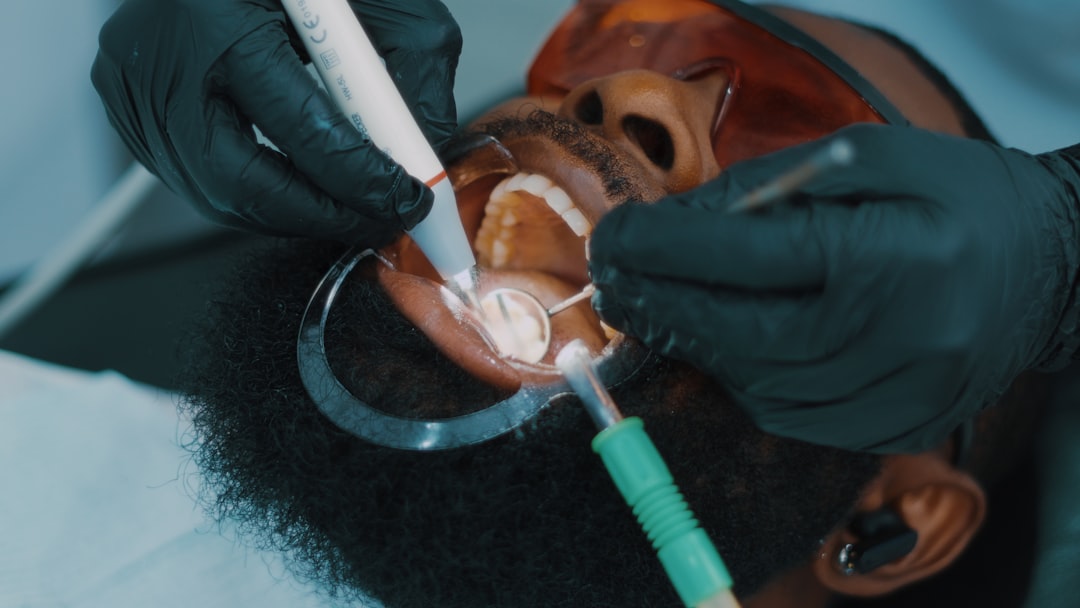 Photo: Shedrack Salami / Unsplash
 Scaling and root planing removes the bacterial deposits below the gumline that no toothbrush can reach.
Your Visit
Medical history, medications, and risk factors — smoking, diabetes, family history, prior periodontal work.
Pocket depths measured around every tooth. Bleeding points and recession are mapped to identify active disease vs. stable areas.
Bitewings and any indicated CBCT to evaluate bone loss and identify areas needing surgical or regenerative intervention.
Staging and grading per AAP guidelines, with a written plan covering scaling, antimicrobials, surgery if needed, and maintenance interval.
When indicated, we begin scaling the same day so improvement starts immediately rather than waiting weeks for a second appointment.
Most patients who lose teeth to gum disease never had pain. The bone is already gone by the time it hurts. The job is to find it before it gets that far.
Patient stories
“Dr. Dailley did a gum graft for me — very gentle and put me at ease. He checked up on me numerous times during recovery. I now have a healthier, beautiful smile.”
— Bonnie G.
“Dr. Teah took over the practice. She is excellent — caring, considerate, and very professional.”
— Diana A., Berkeley